

Respirtory (Y2)
Question 1: Narcolepsy with cataplexy is most closely associated with the deficiency of which neurotransmitter?
A) Dopamine
B) Serotonin
C) GABA
D) Hypocretin (Orexin)
E) Acetylcholine
Question 2: Which of the following factors is most associated with the pathophysiology of Restless Legs Syndrome (RLS)?
A) Increased dopamine levels in the brain
B) Decreased iron levels in the central nervous system
C) Overactivation of GABAergic neurons
D) Elevated ferritin levels
E) Low serotonin levels
Question 3: What does an elevated exhaled nitric oxide (FeNO) level primarily indicate in asthma patients?
A) Airway remodelling
B) Reduced lung function
C) Neutrophilic inflammation
D) Airway hyperresponsiveness
E) Eosinophilic inflammation
Question 4: What is the primary difference between Obstructive sleep apnoea and Central sleep apnoea?
A) OSA is caused by a loss of respiratory drive, whereas CSA involves airway collapse
B) OSA results from airway obstruction, whereas CSA is due to impaired brain signals
C) Both OSA and CSA involve airway obstruction but differ in severity
D) OSA occurs mainly during REM sleep, while CSA occurs only in non-REM sleep
E) CSA is associated with snoring, while OSA is not
Question 5: How does PM2.5 and PM10 contribute to worsening asthma?
A) By promoting airway inflammation and oxidative stress
B) By directly constricting smooth muscles in the airway
C) By increasing oxygen absorption in the lungs
D) By causing immediate bronchospasm without inflammation
E) By reducing mucus production in the airways
Question 6: Which of the following factors increases surfactant production in neonates?
A) Insulin
B) Hypoxia
C) Dexamethasone
D) Acidosis
E) Testosterone
Question 7: A term infant delivered via caesarean section without labour develops rapid breathing shortly after birth. Chest X-ray shows fluid in the fissures but no ground-glass opacities. What is the most likely diagnosis?
A) Respiratory Distress Syndrome (RDS)
B) Congenital Diaphragmatic Hernia (CDH)
C) Meconium Aspiration Syndrome (MAS)
D) Transient Tachypnoea of the Newborn (TTN)
E) Pulmonary Hypoplasia
Question 8: A 28-week premature infant presents with severe respiratory distress immediately after birth. A chest X-ray shows ground-glass opacities and air bronchograms. Which of the following is the most likely cause of this presentation?
A) Surfactant deficiency
B) Transient tachypnoea of the newborn (TTN)
C) Meconium aspiration syndrome (MAS)
D) Congenital diaphragmatic hernia (CDH)
E) Pulmonary hypoplasia
Question 9: A newborn is assessed at 1 minute after birth. The baby has a heart rate of 120 bpm, is breathing weakly, has some flexion in the limbs, a weak cry, and is cyanotic in the extremities. What is the baby’s APGAR score?
A) 3
B) 10
C) 7
D) 8
E) 6
Question 10: A newborn presents with excessive salivation, choking during feeding, and episodes of cyanosis. The doctor suspects TEF. Which of the following findings would confirm this diagnosis?
A) Ground-glass appearance on chest X-ray
B) Coiling of a nasogastric (NG) tube on X-ray
C) Hyperinflated left upper lobe on imaging
D) Bowel loops in the thorax
E) Pleural effusion on ultrasound
Question 11: Which of the following best describes the role of anticoagulants in treating pulmonary embolism (PE)?
A) They dissolve the blood clot immediately.
B) They activate plasmin to break down the clot directly
C) They physically remove the clot from the pulmonary artery.
D) They prevent the clot from growing and allow the body to break it down naturally.
E) They filter blood clots from the inferior vena cava (IVC).
Question 12: Which lab test is used to detect fibrin breakdown products and can help diagnose pulmonary embolism (PE)?
A) Complete blood count (CBC)
B) Prothrombin time (PT)
C) D-dimer test
D) Arterial blood gas (ABG)
E) Troponin level
Question 13: Which of the following is the most common clinical presentation of pulmonary embolism (PE)?
A) Sudden onset of dyspnoea
B) Haemoptysis
C) Cyanosis
D) Productive cough
E) Bradycardia
Question 14: What is the most common cause of bronchiolitis in infants?
A) Influenza virus
B) Adenovirus
C) Parainfluenza virus
D) Rhinovirus
E) Respiratory Syncytial Virus (RSV)
Question 15: What histological feature is most seen in respiratory syncytial virus (RSV)-induced bronchiolitis?
A) Eosinophilic granulomas
B) Syncytial giant cells
C) Necrotizing granulomas
D) Macrophage accumulation
E) Pus-filled abscesses
Question 16: What is a major concern when treating a patient with asbestosis?
A) Acute exacerbation of asthma
B) Fibrosis of the parenchyma
C) Pneumonia
D) Pulmonary embolism
E) Pleural plaques
Question 17: What Z-score finding in spirometry would be concerning for a patient with asthma, indicating significant impairment?
A) Z-score > 1.64
B) Z-score between 0 and 1.64
C) Z-score < -1.64
D) Z-score between -1.64 and 0
E) Z-score > 2.5
Question 18: What would be the most concerning feature in a child with PIMS-TS (Paediatric Inflammatory Multisystem Syndrome Temporally Associated with SARS-CoV-2)?
A) Mild fever with normal inflammatory markers
B) Localised rash limited to the face
C) Mild gastrointestinal upset
D) High fever, elevated inflammatory markers, and multi-organ involvement
E) Elevated WBC count with normal platelets
Question 19: Which of the following respiratory conditions typically presents with biphasic stridor?
A) Croup
B) Asthma
C) Epiglottitis
D) Bronchiolitis
E) Pneumonia
Question 20: Which type of oxygen delivery device provides the highest concentration of oxygen?
A) Nasal cannula
B) Simple face mask
C) Venturi mask
D) Non-rebreather mask
E) CPAP (Continuous Positive Airway Pressure)
Question 21: Which of the following best describes the pathology of Idiopathic Pulmonary Fibrosis (IPF)?
A) Honeycombing pattern in the lungs
B) Non-necrotizing granulomas
C) Caseating granulomas
D) Alveolar macrophage accumulation
E) Extensive mucus production in the bronchioles
Question 22: A 30-year-old man involved in a high-speed car accident presents with shortness of breath and haemoptysis. On examination, you notice tachypnoea and bruising on his chest wall. A chest X-ray shows patchy infiltrates without any rib fractures. What is the most likely diagnosis?
A) Tension pneumothorax
B) Pulmonary contusion
C) Simple pneumothorax
D) Haemothorax
E) Flail chest
Question 23: A 25-year-old man presents to the emergency department after a bicycle accident. He is experiencing sudden chest pain and shortness of breath. On examination, his breath sounds are decreased on the right side, but there is no tracheal deviation. Chest X-ray shows a visible pleural line with no lung markings beyond it. What is the most likely diagnosis?
A) Tension pneumothorax
B) Flail chest
C) Haemothorax
D) Pulmonary contusion
E) Simple pneumothorax
Question 24: Which of the following best describes surgical emphysema?
A) Air leakage into subcutaneous tissue
B) Air trapped in the pleural space
C) Bleeding into the pleural cavity
D) Multiple rib fractures causing paradoxical chest movement
E) Lung tissue damage with oedema from blunt trauma
Question 25: A 50-year-old man has multiple rib fractures on the right side after a fall. During inspiration, the affected segment moves inward, and during expiration, it moves outward. What is this condition called?
A) Tension pneumothorax
B) Haemothorax
C) Pulmonary contusion
D) Flail chest
E) Simple pneumothorax
Question 26: What is the primary mechanism of action (MOA) of Roflumilast in treating COPD?
A) It inhibits beta-2 adrenergic receptors to cause bronchoconstriction.
B) It blocks the breakdown of cyclic AMP (cAMP), reducing inflammation.
C) It acts as a long-acting beta-2 agonist (LABA) to promote bronchodilation.
D) It decreases the number of neutrophils in the bloodstream.
E) It increases the synthesis of corticosteroids in the lungs.
Question 27: How do ICS/LABA combinations work synergistically in managing COPD?
A) ICS reduce inflammation and prevent β-agonist receptor desensitization by restoring receptor numbers.
B) LABA and ICS act on different types of β-receptors to enhance bronchodilation only.
C) ICS increase the release of cytokines, while LABA enhance bronchodilation.
D) ICS prevent the synthesis of inflammatory cells, while LABA cause vasoconstriction in the lungs.
E) LABA reduce the sensitivity of the β-receptors, which ICS cannot reverse.
Question 28: When would oral corticosteroids be preferred over inhaled corticosteroids (ICS) in managing COPD?
A) Oral corticosteroids are always preferred because they are more potent.
B) Oral corticosteroids are used when patients cannot tolerate inhalers due to oral side effects.
C) Oral corticosteroids are typically used for acute exacerbations of COPD.
D) ICS are more effective than oral corticosteroids in severe COPD cases.
E) Oral corticosteroids are preferred in patients with mild COPD.
Question 29: A 5-year-old boy presents to the emergency department with a harsh, high-pitched inspiratory noise that worsens when he breathes in. He appears very unwell, is sitting forward with his neck extended, and has indrawing of the chest on every breath. His parents report a fever that started earlier that day. What is the most likely diagnosis?
A) Laryngomalacia
B) Foreign body aspiration
C) Acute Epiglottitis
D) Chronic Inspiratory Stridor
E) Viral respiratory infection
Question 30: A 72-year-old man with a history of chronic heart failure presents to the clinic with worsening shortness of breath and fatigue. On auscultation of his lungs, you hear fine crackles at the lung bases. What is the most likely underlying cause of these breath sounds?
A) Bronchitis
B) Pulmonary oedema
C) Asbestosis
D) Viral respiratory infection
E) Foreign body aspiration
Question 31: A 2-year-old child is brought to the emergency department with a sudden onset of barking cough, stridor, and hoarseness. The child has a mild fever and appears anxious but is not in severe respiratory distress. The stridor is worse at night and improves with exposure to moist air. What is the most likely diagnosis?
A) Acute epiglottitis
B) Croup (laryngotracheobronchitis)
C) Laryngomalacia
D) Foreign body aspiration
E) Bacterial tracheitis
Question 32:
A 3-year-old child presents with a cough, mild wheezing, and crackles on auscultation. The child has a runny nose and slight fever but is not in severe respiratory distress. What is the most likely diagnosis?
A) Bronchiolitis
B) Tonsillitis
C) Pneumonia
D) Otitis Media
E) Pneumonitis
Question 33: A 2-year-old child presents with cough, wheezing, and mild respiratory distress. The child has a runny nose and mild fever. Based on the presentation, bronchiolitis is suspected. What is the most common pathogen responsible for this condition in children?
A) Streptococcus pneumoniae
B) Respiratory Syncytial Virus (RSV)
C) Haemophilus influenza
D) Influenza virus
E) Mycoplasma pneumoniae
Question 34: A 5-year-old child presents with a fever, cough, and pleuritic chest pain. On examination, there is dullness to percussion and decreased breath sounds over the affected area. A chest X-ray reveals a localised fluid collection. The child is diagnosed with a lung infection. What is the key difference between a lung abscess and empyema?
A) Lung abscess has a thick, walled cavity, while empyema presents with free-flowing pleural fluid
B) Lung abscess is associated with consolidation, while empyema is associated with a normal chest X-ray
C) Lung abscess typically occurs in the lower lobes, while empyema occurs in the upper lobes
D) Lung abscess results from viral infections, while empyema is caused by bacterial infections
E) Lung abscess presents with a localised fluid collection, while empyema is characterised by diffuse interstitial fluid
Question 35: A 45-year-old man presents with acute onset dyspnoea, pleuritic chest pain, and haemoptysis. He has a history of recent long-haul travel and was diagnosed with a deep vein thrombosis (DVT) three days ago. His vitals show tachycardia, tachypnoea, and hypotension. A CT pulmonary angiogram confirms a massive pulmonary embolism. Which of the following findings on diagnostic tests would most likely indicate severe right ventricular strain associated with his condition?
A) Elevated D-dimer
B) High probability V/Q mismatch
C) S1Q3T3 pattern on ECG
D) Normal BNP levels
E) PA width smaller than the aortic width on CT
Question 36: A 60-year-old woman presents to the emergency department with sudden-onset dyspnoea, pleuritic chest pain, and a swollen, painful left leg. Her past medical history includes a recent hip replacement surgery. Her oxygen saturation is 88% on room air, and her heart rate is 115 bpm. A CT pulmonary angiogram confirms a pulmonary embolism. Which of the following findings on imaging or laboratory results is most specific for diagnosing pulmonary embolism?
A) Elevated D-dimer
B) Hampton’s Hump on chest X-ray
C) Mismatched ventilation/perfusion (V/Q) defect on a V/Q scan
D) Right axis deviation on ECG
E) Swelling, heat, and pain in the left leg
Question 37: A 45-year-old man presents with swelling, pain, and redness in his left calf that started two days ago. He recently underwent abdominal surgery and has been bedridden for the past week. Examination reveals tenderness over the left calf and a positive Homan’s sign. Which component of Virchow’s triad most likely contributed to this patient’s condition?
A) Endothelial injury
B) Hypercoagulability
C) Stasis of blood flow
D) Reduced oxygenation
E) Vessel dilation
Question 38: A 62-year-old man with a 40-pack-year smoking history presents with persistent cough, weight loss, and haemoptysis. Imaging reveals a mass in the central part of his right lung near the bronchi. Based on this presentation, which type of lung cancer is the most likely diagnosis?
A) Small cell lung cancer
B) Adenocarcinoma
C) Squamous cell carcinoma
D) Large cell carcinoma
E) Mesothelioma
Question 39: A 64-year-old man with a history of emphysema presents to the hospital with worsening shortness of breath over the past 24 hours. He has been using his home oxygen more frequently, and on examination, he is tachypnoeic, with an oxygen saturation of 84% on room air. His arterial blood gas (ABG) shows a pH of 7.31, PaCO2 of 56 mmHg, and PaO2 of 50 mmHg. Chest X-ray shows hyperinflated lungs with no evidence of pneumonia or pneumothorax. Which of the following is the most likely explanation for his current condition?
A) Acute Type 1 respiratory failure due to diffuse alveolar damage
B) Chronic Type 2 respiratory failure due to inadequate ventilation in COPD
C) Acute Type 2 respiratory failure due to COPD exacerbation
D) Type 1 respiratory failure due to pulmonary embolism
E) Type 2 respiratory failure due to chest wall deformity
Question 40: A 6-year-old child presents to the emergency department with fever, drooling, and a high-pitched stridor. The child is visibly distressed and unable to swallow saliva. On examination, the child appears toxic, with signs of respiratory distress but no cough. The parents mention that the child was up to date with their vaccinations. Which of the following is the most likely diagnosis?
A) Croup
B) Tonsillitis
C) Epiglottitis
D) Pertussis
E) Common Cold
Question 41: A 6-year-old child presents with a persistent dry cough, facial flush, and vomiting after coughing episodes. The child also has occasional cyanosis and apnoea. What is the most likely diagnosis?
A) Epiglottitis
B) Croup
C) Pertussis
D) Tonsillitis
E) Common Cold
Question 42: A 3-year-old child presents with a barking cough, inspiratory stridor, and difficulty breathing at night. The child has had a viral upper respiratory tract infection for the past few days. What is the first-line treatment for this condition?
A) Macrolides
B) Dexamethasone
C) Antibiotics
D) Intubation
E) Antivirals
Question 43: A 9-month-old infant presents with increasing respiratory distress after several days of upper respiratory tract symptoms, including a runny nose and cough. On examination, you note the presence of nasal flare, tracheal tug, and intercostal retractions. The child is feeding poorly and has crackles and wheezing on auscultation. What is the most likely diagnosis?
A) Pneumonia
B) Bronchiolitis
C) Measles
D) Influenza
E) Bronchiectasis
Question 44: A 3-year-old child presents with a high fever, cough, and difficulty breathing for the past 48 hours. On examination, the child is tachypnoeic, tachycardic, and has decreased breath sounds along with crackles on auscultation. What is the most appropriate next step in the diagnosis of this child?
A) Perform a throat swab for PCR testing
B) Start empiric antibiotic therapy
C) Order a chest X-Ray scan
D) Obtain a blood culture
E) Order a complete blood count (CBC)
Question 45: A 35-year-old male is involved in a motor vehicle accident and is brought to the emergency department with obvious chest trauma. He is conscious but in respiratory distress with decreased breath sounds on the left side. On examination, his trachea is deviated to the right, and his jugular veins are distended. What is the most likely diagnosis, and what should be done immediately?
A) Open pneumothorax – Apply a chest seal
B) Tension pneumothorax – Needle decompression
C) Massive haemothorax – Insert a chest tube
D) Flail chest – Provide pain management and support ventilation
E) Cardiac tamponade – Pericardiocentesis.
Question 46: A 30-year-old male presents to the emergency department after a blunt chest injury in a motor vehicle accident. He complains of sudden sharp chest pain and difficulty breathing. On examination, his respiratory rate is 30 breaths per minute, and he has decreased breath sounds on the left side of his chest. Percussion over the left lung is hyperresonant, and there is no tracheal deviation. A chest X-ray confirms a small left-sided pneumothorax. What is the most appropriate next step in management for this patient?
A) Chest tube placement
B) Needle thoracostomy
C) Observation and oxygen therapy
D) Thoracotomy
E) Pericardiocentesis
Question 47: A 45-year-old male presents to the emergency department after being involved in a high-speed collision. He is conscious but in severe respiratory distress. On examination, his blood pressure is 90/60 mmHg, heart rate is 120 bpm, and he is tachypnoeic. His neck veins are distended, and his heart sounds are muffled. He exhibits a paradoxical decrease in systolic blood pressure with inspiration. A chest X-ray shows no significant lung injuries, and a bedside echocardiogram reveals an effusion surrounding the heart with early signs of right atrial collapse.
What is the most likely diagnosis, and what is the next immediate step in management?
A) Cardiac tamponade due to traumatic pericardial effusion – Immediate pericardiocentesis
B) Cardiac tamponade due to acute myocardial infarction – Emergent coronary angiography
C) Tension pneumothorax – Needle thoracostomy
D) Massive haemothorax – Insert a chest drain
E) Pulmonary embolism – Administer anticoagulation
Question 48: A patient sustains blunt chest trauma from a car accident. A subsequent chest X-ray reveals patchy infiltrates without any obvious fractures. What is the underlying pathophysiological mechanism of the most likely diagnosis?
A) Disruption of the pleura leading to air in the pleural space
B) Accumulation of blood in the pleural space
C) Bruising of the lung tissue leading to oedema and haemorrhage
D) Rupture of the trachea or bronchial tree
E) Compression of the heart by fluid accumulation in the pericardium
Question 49: A 32-year-old man is brought to the emergency department after a high-speed motor vehicle accident. He has significant chest trauma and is experiencing difficulty breathing. On examination, the skin on his upper chest, face, and neck feels like bubble wrap, and there is noticeable swelling of these areas. What is the most likely diagnosis & treatment?
A) Tension pneumothorax – chest drain
B) Subcutaneous emphysema – chest drain
C) Flail chest – screwed plates
D) Pulmonary contusion – supportive therapy
E) Haemothorax – chest drain
Question 50: A 5-year-old child is referred for further investigation after being found to have persistently high levels of immune-reactive trypsinogen in their heel prick test. The child has a history of recurrent respiratory infections, chronic cough, and nasal polyps. The parents also report a history of poor growth despite a good appetite. Which of the following is the most likely underlying genetic mutation in this child?
A) Class I – Non-functional protein
B) Class II – No traffic (mis-shaped protein)
C) Class III – Reduced gating
D) Class IV – Decreased conduction
E) Class V – Reduced synthesis of protein
Question 51: A 12-year-old boy with cystic fibrosis presents with worsening chronic cough and increased sputum production. His parents mention frequent hospitalisations for respiratory infections, and he also has a history of sinusitis and nasal polyps. On examination, he has a barrel chest and crackles on lung auscultation. What is the most likely pathophysiological mechanism contributing to the boy’s chronic respiratory symptoms?
A) Impaired chloride secretion leading to dehydrated mucus and airway obstruction
B) Increased sodium absorption causing hyperviscosity of the mucus
C) Dysfunctional ciliary action leading to poor mucus clearance
D) Bronchial smooth muscle constriction due to airway inflammation
E) Reduced pulmonary vascular permeability leading to interstitial oedema
Question 52: A 35-year-old woman with a history of chronic immunosuppression due to a kidney transplant presents with acute onset of cough, dyspnoea, and fever. On examination, she is found to be hypoxic with diffuse crackles on chest auscultation. A chest X-ray shows diffuse, bilateral infiltrates. The patient is started on antibiotics, but her condition worsens, and she requires mechanical ventilation. Microscopic examination of her sputum reveals yeast-like organisms. Which of the following pathogens is most likely responsible for her condition?
A) Mycobacterium Tuberculosis
B) Pneumocystis Jirovecii
C) Streptococcus Pneumoniae
D) Paragonimus Westermani
E) Echinococcus Granulosus
Question 53: A 45-year-old man with a history of HIV presents with chronic cough, night sweats, and unintentional weight loss over the past several months. On examination, he has bilateral lymphadenopathy and signs of upper lobe consolidation on a chest X-ray. His Mantoux skin test is positive. Given his HIV status, which of the following is the most appropriate initial management step for this patient?
A) Start antiretroviral therapy (ART) immediately and initiate TB treatment with Isoniazid, Rifampin, Pyrazinamide, and Ethambutol.
B) Begin treatment with Isoniazid and Rifampin only, deferring ART until TB treatment is complete.
C) Initiate TB treatment with Isoniazid, Rifampin, Pyrazinamide, and Ethambutol and admit the patient for isolation.
D) Start TB treatment with Isoniazid and Rifampin, then refer for surgery to remove the lung consolidation.
E) Admit the patient for monitoring and start empiric antibiotics for community-acquired pneumonia while awaiting TB diagnosis confirmation.
Question 54: A 70-year-old man with a history of chronic obstructive pulmonary disease (COPD) presents for his annual check-up. His doctor recommends vaccination against pneumococcal disease. Which of the following statements is correct regarding the appropriate pneumococcal vaccine for this patient?
A) The 23-valent polysaccharide vaccine is recommended because he is older than 65 years.
B) The 13-valent conjugate vaccine should be given because it is more expensive and provides broader protection.
C) The patient should receive both the 13-valent conjugate vaccine and the 23-valent polysaccharide vaccine due to his age and COPD.
D) Only the 23-valent polysaccharide vaccine is required since the 13-valent conjugate vaccine only prevents lung pneumonia & not systemic diseases.
E) Pneumococcal vaccination is not recommended for individuals with chronic diseases like COPD.
Question 55: A 65-year-old man presents with a progressive dry cough and shortness of breath over the past year. He has a 40-pack-year smoking history and was diagnosed with rheumatoid arthritis (RA) 10 years ago. He takes methotrexate for his RA. Physical examination reveals fine inspiratory crackles at both lung bases, and pulmonary function tests show a restrictive pattern with reduced diffusing capacity. A high-resolution CT scan reveals honeycombing at the lung bases. Considering his medical history and clinical presentation, what is the most likely cause of his interstitial lung disease?
A) Idiopathic Pulmonary Fibrosis – Progressive, idiopathic fibrosis
B) Methotrexate-induced Pneumonitis – Drug-induced lung injury
C) Sarcoidosis – Granulomatous inflammation of the lungs
D) Asbestosis – Occupational exposure to asbestos fibres
E) Rheumatoid Arthritis-associated Interstitial Lung Disease – ILD associated with autoimmune disease
Question 56: A 42-year-old male presents with dyspnoea, non-productive cough, and fatigue over the past few months. On examination, his lower legs show erythema nodosum, and there is bilateral hilar lymphadenopathy. A chest X-ray reveals bilateral reticulonodular opacities, while a CT scan shows ground-glass opacities and fibrotic changes in the upper lobes. Granulomas are identified on biopsy. Despite his symptoms and radiological findings, his history does not indicate any prior exposure to bird droppings or similar antigens.
Given the patient’s exposure history and radiological findings, what is the most likely diagnosis?
A) Sarcoidosis
B) Hypersensitivity Pneumonitis (HP)
C) Non-specific interstitial pneumonia
D) Tuberculosis
E) Idiopathic Pulmonary Fibrosis
Question 57: A 28-week pregnant woman with uncontrolled diabetes mellitus presents in preterm labour. Which of the following factors is most likely to decrease surfactant production in her foetus?
A) Administration of glucocorticoids
B) Hypothermia during labour
C) Increased insulin levels in the foetus
D) Maternal beta-adrenergic drugs
E) Administration of thyroid hormones
Question 58: A newborn delivered via caesarean section without prior labour presents with signs of respiratory distress. Which of the following is unlikely to contribute to the prevention of neonatal respiratory distress syndrome in this infant?
A) Increased catecholamine production during labour
B) Increased thoracic squeeze during vaginal delivery
C) Increased thyroid hormone release
D) Reduced fetal glucocorticoid production
E) Increased amniotic fluid clearance during labour
Question 59: A newborn presents with cyanosis, wheezing, and retractions. An X-ray shows a collapsed left lung. The infant is diagnosed with congenital lobar emphysema. Which of the following is most likely to contribute to the development of this condition?
A) Increased bronchial cartilage thickness
B) Absence, hypoplasia, or dysplasia of bronchial cartilage
C) Excessive surfactant production
D) Pulmonary venous return anomaly leading to hyperinflation
E) Congenital diaphragmatic hernia
Question 60: A neonate is diagnosed with persistent pulmonary hypertension of the newborn (PPHN) following birth. The infant has cyanosis and respiratory distress. An echocardiogram confirms increased pulmonary hypertension. Which of the following is the most likely cause of the persistent pulmonary hypertension in this neonate?
A) Maternal polyhydramnios leading to foetal heart compression
B) A patent ductus arteriosus causing deoxygenated blood flow
C) Congenital cystic adenomatoid malformation causing airway obstruction
D) Surfactant deficiency due to premature birth
E) Mechanical ventilation causing lung injury
Question 61: A 5-year-old child presents with recurrent episodes of wheezing, cough, and chest tightness. The symptoms are worse at night and after exposure to allergens such as dust mites and pet dander. The child has a family history of asthma, and their mother smokes. A peak flow diary shows significant day-to-day variability, and a fractional exhaled nitrous oxide (FeNO) test reveals a level of 45 ppb. Which of the following factors is most likely contributing to the development of this child’s asthma?
A) Maternal smoking during pregnancy leading to epigenetic changes
B) A history of transient early wheeze associated with maternal smoking
C) A non-atopic wheeze triggered by childhood infections
D) Absence of IgE-mediated allergic response to environmental allergens
E) Lack of airway inflammation due to reduced eosinophil activity
Question 62: A 4-year-old child with a history of recurrent wheezing and cough presents with exacerbation of symptoms after exposure to pollen. Spirometry shows reversible airflow obstruction. The child’s sputum contains increased eosinophils, and fractional exhaled nitric oxide (FeNO) levels are elevated. Which of the following best describes the underlying immunopathology contributing to this child’s asthma?
A) Activation of TH17 cells leading to neutrophilic inflammation and airway fibrosis
B) Enhanced B-cell production of IgE in response to IL-4 and IL-13, promoting mast cell degranulation
C) Predominance of TH1-mediated responses causing chronic inflammation and airway remodelling
D) Overproduction of leukotrienes via mast cell activation and eosinophil degranulation
E) Loss of airway smooth muscle contractility due to chronic inflammation and fibrosis
Question 63: A 25-year-old male presents with intermittent wheezing and cough, especially during exercise and exposure to allergens. He has a family history of asthma, and he reports symptoms worsening at night. To evaluate for asthma, the following tests are conducted:
- Spirometry: FEV1/FVC ratio is 68%
- Peak flow diary: Variability in peak flow of 23% over the past 3 weeks
- Bronchodilator reversibility test: FEV1 improves by 210 mL after salbutamol
- FeNO test: 45 ppb
- Skin prick test: Positive for dust mites and pollen
Which of the following tests is most suggestive of asthma in this patient?
A) Spirometry showing FEV1/FVC <70%
B) A peak flow variability of >20% over 3 weeks
C) A positive skin prick test for dust mites and pollen
D) A FeNO level of 45 ppb
E) Bronchodilator reversibility test improvement of >12%/200 mL
Question 64: A 52-year-old male with a history of heart failure presents to the clinic complaining of frequent episodes of waking up gasping for air, excessive daytime sleepiness, and difficulty concentrating. On further evaluation, he reports alternating periods of rapid breathing and pauses in his sleep. Polysomnographic studies are ordered, and the results reveal the following:
- Cessation of airflow with continued respiratory effort
- Decreased airflow associated with increased expiratory effort
- Occasional periods of complete cessation of breathing with no respiratory effort
Which of the following diagnoses is most likely in this patient?
A) Central Sleep Apnoea
B) Obstructive Sleep Apnoea
C) Mixed Sleep Apnoea
D) Cheyne-Stokes Breathing
E) Central Sleep Apnoea due to drug toxicity
Question 65: A 17-year-old female presents with a history of excessive daytime sleepiness for the past 6 months, which has progressively worsened. She reports episodes where she suddenly feels weak and collapses, particularly when laughing or experiencing strong emotions. Additionally, she describes episodes of waking up in the morning and feeling unable to move or speak for several seconds. On further questioning, she mentions that her sleep is fragmented, with vivid dreams occurring almost immediately after falling asleep. The patient has had no recent infections or trauma.
What is the most likely cause of this patient’s condition?
A) Loss of orexin-producing neurons in the lateral hypothalamus
B) Dysfunction of the brainstem responsible for respiratory control
C) Overactivation of the sympathetic nervous system
D) Insufficient dopamine production in the substantia nigra
E) Genetic mutation affecting circadian rhythm regulation
Question 66: A 40-year-old man presents with episodes during sleep in which he acts out his dreams, often becoming violent and striking out at his sleeping partner. These episodes occur in the latter part of the night, and he is often unaware of his actions upon waking. He has a history of Parkinson’s disease, diagnosed three years ago. His wife reports that the behaviour has become more frequent and intense in recent months.
Which of the following is the most likely diagnosis?
A) Restless Leg Syndrome
B) Non-REM Parasomnia
C) REM Sleep Behaviour Disorder
D) Narcolepsy
E) Sleepwalking
Question 67: A 58-year-old man presents with chronic cough, shortness of breath, and wheezing. He has a long history of smoking 20 cigarettes per day for 30 years. On examination, he is dyspnoeic at rest, with prolonged expiration and decreased breath sounds. A chest X-ray shows hyperinflation of the lungs. His pulmonary function tests reveal a reduced FEV1/FVC ratio, consistent with obstructive lung disease.
What is the most likely pathophysiological mechanism contributing to the patient’s condition?
A) Inactivation of α1-antitrypsin leading to unchecked elastin breakdown
B) Deficiency of surfactant causing alveolar collapse
C) Increased production of mucus leading to bronchial obstruction
D) Excessive production of IgE resulting in bronchial hyperresponsiveness
E) Increased capillary permeability causing pulmonary oedema
Question 68: A 65-year-old man presents with a persistent cough and chest pain. A chest X-ray is performed, and a mass is noted in the lower left hemithorax. The borders of the mass are irregular, and there is evidence of rib destruction. Which of the following is the most likely classification of this mass based on its radiological appearance?
A) Pulmonary pathology
B) Pleural pathology
C) Extra-pleural pathology
D) Benign lung nodule
E) Pneumonia
Question 69:
Which laryngeal muscle is primarily responsible for abducting the vocal cords during respiration?
A. Posterior cricoarytenoid
B. Lateral cricoarytenoid
C. Thyroarytenoid
D. Cricothyroid
E. Interarytenoid
Question 70:
A 3-year-old child presents with a barking cough, stridor, hoarseness, and respiratory distress. The condition is diagnosed as croup. Which of the following pathogens is the most common cause?
A. Parainfluenza virus
B. Respiratory syncytial virus (RSV)
C. Influenza virus
D. Adenovirus
E. Streptococcus pyogenes
Question 71:
A 50 year old patient presents with pyrexia, productive cough, breathlessness and chest pain when breathing, upon percussion on the left sided chest he notices lower down it is dull. The doctor suggests a chest x-ray to further differentiate their symptoms, what condition best matches this presentation?
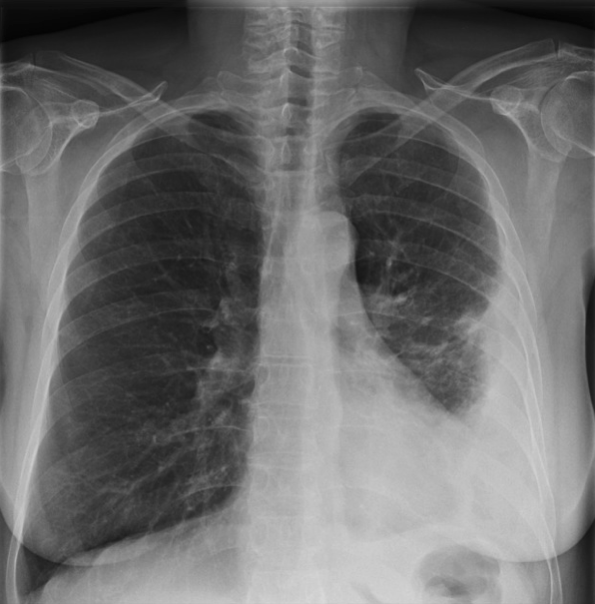
- Pleural effusion
- Pneumonia
- Emphysema
- ILD
- Empyema
Question 72:
A neonate born at 28 weeks of gestation via C section presents with tachypnea, nasal flaring, grunting, and cyanosis. A chest X-ray shows a ground-glass appearance with air bronchograms. What is the most likely cause of the neonate’s respiratory distress?
A. Surfactant deficiency
B. Persistent pulmonary hypertension of the newborn (PPHN)
C. Transient tachypnea of the newborn (TTN)
D. Meconium aspiration syndrome (MAS)
E. Congenital diaphragmatic hernia (CDH)
Question 73:
A 55-year-old man with a history of smoking presents with progressive breathlessness and chronic cough. Pulmonary function tests show the following results:
- FEV1: 55% of predicted
- FVC: 70% of predicted
- FEV1/FVC ratio: 60%
- DLCO: 50% of predicted
What is the most likely diagnosis based on these pulmonary function results?
A. Neuromuscular disorder
B. Idiopathic pulmonary fibrosis (IPF)
C. Asthma
D. Chronic obstructive pulmonary disease (COPD)
E. Pulmonary embolism (PE)
Question 74:
A 7-year-old girl presents with recurrent episodes of wheezing, coughing, and shortness of breath, particularly at night and after playing sports. She has a history of eczema and her mother has asthma. Which of the following diagnostic approaches is most appropriate to confirm asthma in this child?
A. Chest X-ray to rule out structural abnormalities
B. Spirometry with bronchodilator reversibility testing
C. Skin prick testing for aeroallergens
D. Serum IgE and eosinophil count
E. Peak expiratory flow monitoring over several weeks
Question 75:
A 34-year-old woman with a 10-year history of asthma presents with worsening symptoms. She reports daily wheezing, night-time awakenings twice a week, and increasing reliance on her salbutamol inhaler. Her current treatment includes a medium-dose inhaled corticosteroid (ICS) and as-needed short-acting beta-agonist (SABA). Spirometry shows an FEV1 of 70% predicted with a significant post-bronchodilator improvement. Fractional exhaled nitric oxide (FeNO) is elevated. What is the most appropriate next step in her management?
A. Add a long-acting beta-agonist (LABA) to her ICS
B. Switch to a leukotriene receptor antagonist (LTRA) as monotherapy
C. Increase her ICS dose to high-dose therapy
D. Add a long-acting muscarinic antagonist (LAMA)
E. Refer for biologic therapy targeting interleukin-5 (IL-5)
Question 76:
A 48-year-old man presents with excessive daytime sleepiness, loud snoring, and unrefreshing sleep. His wife reports episodes where he stops breathing during the night. He has a BMI of 34 kg/m², a neck circumference of 45 cm, and no significant comorbidities. A home sleep study shows an apnea-hypopnea index (AHI) of 18 events/hour. What distinguishes obstructive sleep apnea (OSA) from obstructive sleep apnea syndrome (OSAS) in this patient?
A. The presence of an elevated AHI
B. The presence of obesity as a risk factor
C. The presence of excessive daytime sleepiness
D. The occurrence of loud snoring and witnessed apneas
E. The association with an increased risk of cardiovascular disease
Question 77:
A 45-year-old man presents with symptoms of gastroesophageal reflux disease (GERD), including heartburn and regurgitation. Imaging reveals a sliding hiatal hernia, where the gastroesophageal junction has moved into the thoracic cavity through the esophageal hiatus. At what vertebral level does the oesophagus pass through the diaphragm?
A. T8
B. T10
C. T4
D. T11
E. T12
Question 78:
A 56-year-old man presents with a 10-year history of wheezing, dyspnea, and a persistent productive cough. He smokes 25 cigarettes per day and has a 40 pack-year smoking history. Spirometry shows an FEV1/FVC ratio of 65% with an FEV1 improvement of 5% (50 mL) after bronchodilator therapy. What feature most reliably differentiates COPD from asthma in this patient?
A. A reduced FEV1/FVC ratio on spirometry
B. History of smoking
C. Presence of wheezing and dyspnea
D. Poor reversibility of airflow obstruction
E. Onset of symptoms in adulthood
Question 79:
A 40-year-old non-smoker presents with progressive shortness of breath, wheezing, and a chronic productive cough. He has no significant occupational exposures or family history of lung disease. Spirometry reveals an FEV1/FVC ratio of 55%, and a chest X-ray shows basal emphysema. Blood tests are ordered to investigate for an inherited cause of his condition. Which of the following is the most likely inherited condition contributing to his COPD?
A. Cystic fibrosis
B. Marfan syndrome
C. connective tissue disorder
D. Ehlers-Danlos syndrome
E. Alpha-1 antitrypsin deficiency
Question 80:
A 35-year-old woman presents to the emergency department with sudden onset of shortness of breath and chest pain. She is a smoker but has no previous medical history. On examination, you notice her legs are swollen. She appears anxious but is not in respiratory distress. Her vital signs are as follows: temperature 36.8°C, heart rate 120 beats per minute, respiratory rate 18 breaths per minute, and blood pressure 120/78 mmHg.
The physician is considering a diagnosis of pulmonary embolism (PE). The physician decides to apply the Wells score for PE.
Which of the following is the next most appropriate action to take based on the patient’s Wells score for PE?
A) Order a CT pulmonary angiogram (CTPA), as the patient has a high clinical probability for PE.
B) Send for a D-dimer test and await results before further management.
C) Administer low-molecular-weight heparin as an empirical treatment for PE.
D) Place the patient on supplemental oxygen and observe in the emergency department for 24 hours.
E) Order a chest X-ray to rule out other causes of chest pain.
Question 81:
A 58-year-old male patient with a history of deep vein thrombosis (DVT) presents to the emergency department with sudden onset of chest pain, shortness of breath, and tachypnea. His vital signs show a heart rate of 110 beats per minute, respiratory rate of 22 breaths per minute, and blood pressure of 105/65 mmHg. A diagnosis of pulmonary embolism (PE) is suspected.
What would you most likely expect to see on the patient’s ECG?
A) S1Q3T3 pattern (deep S wave in lead I, Q wave in lead III, and inverted T wave in lead III).
B) Prolonged PR interval.
C) Left axis deviation.
D) Nonspecific ST-segment and T-wave changes.
E) Ventricular tachycardia.
Question 82:
A 62-year-old non-smoking woman presents with a persistent cough, weight loss, and occasional hemoptysis. A chest X-ray shows a solitary pulmonary nodule, and a subsequent CT scan confirms a mass in the right upper lobe. A biopsy is performed, and molecular testing reveals a mutation in the epidermal growth factor receptor (EGFR).
What is the most likely type of lung cancer in this patient?
A) Small cell lung cancer.
B) Squamous cell carcinoma.
C) Large cell carcinoma.
D) Adenocarcinoma.
E) Carcinoid tumor.
Question 83:
A 65-year-old man with a 40-year history of smoking presents to the emergency department with a persistent cough, hemoptysis, and fatigue. He is also complaining of increasing weakness and constipation. Blood tests reveal hypercalcemia with a calcium level of 12.2 mg/dL (normal range: 8.5-10.5 mg/dL). A chest X-ray reveals a mass in the right upper lobe, and a biopsy is performed.
Which of the following is the most likely diagnosis based on the patient’s presentation?
A) Squamous cell carcinoma.
B) Small cell lung cancer.
C) Non-small cell lung cancer, adenocarcinoma.
D) Large cell carcinoma.
E) Pulmonary metastasis from another primary site.
Question 84:
A 72-year-old man with a known history of interstitial lung disease (ILD) presents to the emergency department with worsening dyspnea over the past week. He reports increased fatigue and confusion. Examination reveals diffuse inspiratory crackles on auscultation and mild cyanosis. He is tachypneic with a respiratory rate of 26 breaths per minute, oxygen saturation of 85% on room air, and no peripheral edema. Arterial blood gas (ABG) on room air shows:
- pH: 7.28 (normal 7.35–7.45)
- PaCO2: 58 mmHg (normal 35–45 mmHg)
- PaO2: 48 mmHg (normal 80–100 mmHg)
- HCO3-: 30 mEq/L (normal 22–28 mEq/L)
What is the most likely explanation for this patient’s ABG results?
A) Type 2 Respiratory Failure due to chronic alveolar hypoventilation in interstitial lung disease (ILD).
B) Type 1 Respiratory Failure due to pulmonary fibrosis exacerbation.
C) Metabolic acidosis with compensatory respiratory acidosis.
D) Mixed acid-base disorder with hypoxemia due to underlying lung disease.
E) Type 2 Respiratory Failure due to advanced neuromuscular fatigue exacerbating ILD.
Question 85:
A 25-year-old woman presents with a history of intermittent wheezing, shortness of breath, and cough. Which of the following best supports a diagnosis of asthma?
A) l FEV1/FVC ratio (0.80) and non-reversible spirometry.
B) Elevated FeNO (50 ppb) and PEF variability (25%).
C) Non-reversible spirometry and normal FeNO after treatment (10 ppb).
D) Normal FeNO (10 ppb) and lack of bronchodilator reversibility.
Question 86:
A 45-year-old woman presents with shortness of breath on exertion. Spirometry shows normal lung volumes and a preserved FEV1/FVC ratio. A diffusing capacity for carbon monoxide (DLCO/TLCO) test is performed and reveals a significantly elevated value.
Which of the following conditions is most likely to cause an elevated DLCO/TLCO?
A) Chronic obstructive pulmonary disease (COPD).
B) Pulmonary hypertension.
C) Pulmonary hemorrhage.
D) Idiopathic pulmonary fibrosis (IPF).
E) Pneumothorax.
Question 87:
A 35-year-old man is brought to the emergency department after a motor vehicle collision. He is in respiratory distress with hypotension, tracheal deviation to the left, and reduced breath sounds on the right side. A clinical diagnosis of tension pneumothorax is made, and urgent needle decompression is required.
What is the correct anatomical site for needle decompression in a tension pneumothorax?
A) 4th intercostal space, midaxillary line.
B) 2nd intercostal space, midclavicular line.
C) 5th intercostal space, anterior axillary line.
D) 6th intercostal space, midscapular line.
E) 3rd intercostal space, midclavicular line.
Question 88:
A 10-year-old child with recurrent respiratory infections, steatorrhea, and failure to thrive is diagnosed with cystic fibrosis. Genetic testing reveals a CFTR mutation resulting in the complete absence of CFTR protein production.
Which class of CFTR mutation is most likely responsible for this presentation?
A) Class I: Defective protein production.
B) Class II: Defective protein processing.
C) Class III: Defective regulation.
D) Class IV: Defective conduction.
E) Class V: Reduced protein quantity.
Question 89:
A 58-year-old man is admitted to the intensive care unit following major abdominal surgery. He requires mechanical ventilation for five days due to respiratory failure. He develops a fever, increased respiratory secretions, and worsening oxygenation. Chest X-ray reveals new infiltrates. A clinical diagnosis of ventilator-associated pneumonia (VAP) is made.
Which of the following pathogens is the most likely cause of his condition?
A) Staphylococcus aureus (including MRSA).
B) Streptococcus pneumoniae.
C) Haemophilus influenzae.
D) Pseudomonas aeruginosa.
E) Legionella pneumophila.
 Med Wiz